

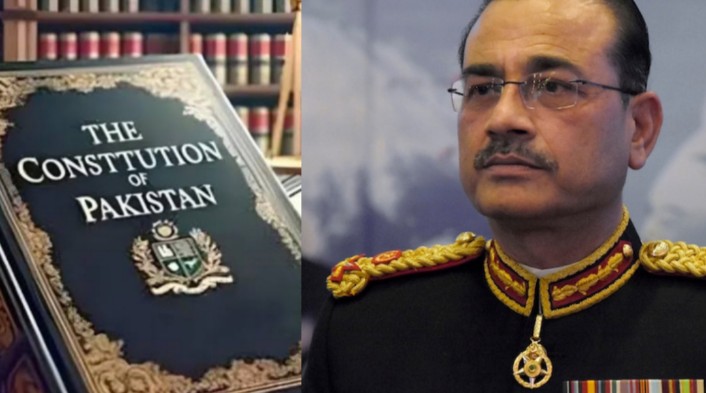
Pakistan Introduces 27th Constitutional Amendment to Establish Chief of Defence Forces Post
Islamabad, Nov 9: Pakistan’s government has tabled the 27th Constitutional Amendment Bill in Parliament, proposing the creation of a new post — Chief of Defence Forces (CDF) — designed to bring the Army, Navy, and Air Force under a more unified command. Officials say the move is meant to strengthen coordination among the three services and streamline strategic decision-making.
The amendment seeks to revise Article 243 of the Constitution, which outlines the structure and oversight of the armed forces. Under the proposal, both the Chief of Army Staff and the newly established Chief of Defence Forces would be appointed by the President on the advice of the Prime Minister.
According to the bill, the Army Chief will concurrently hold the position of Chief of Defence Forces and, in consultation with the Prime Minister, will appoint the head of the National Strategic Command—a role that will be reserved for an Army officer.
The amendment also empowers the government to award honorary lifetime ranks such as Field Marshal, Marshal of the Air Force, and Admiral of the Fleet—titles that carry ceremonial significance and lifetime privileges.
A key provision in the legislation states that the Chairman Joint Chiefs of Staff Committee, a post that has existed for decades, will be abolished after November 27, 2025.
Lessons from the May Conflict
Analysts say the government’s decision reflects lessons learned from the brief but intense confrontation with India earlier this year. The four-day conflict in May exposed what officials described as gaps in Pakistan’s joint command structure and coordination during modern, high-intensity warfare.
The confrontation followed the April 22 Pahalgam terror attack, after which India launched Operation Sindoor on May 7, targeting militant networks in Pakistan-administered areas. The operation triggered fierce air and ground exchanges until May 10, when both sides reportedly agreed to halt hostilities.
According to Indian Air Chief Marshal A.P. Singh, at least a dozen Pakistani aircraft—including American-made F-16s—were destroyed or damaged in the strikes.
In the aftermath, Pakistan elevated Army Chief General Asim Munir to the honorary rank of Field Marshal, making him only the second officer in the nation’s history to hold the title.
Wider Constitutional Reforms
The 27th Amendment isn’t limited to military restructuring. It also proposes the creation of a Federal Constitutional Court, adjustments to the appointment process for High Court judges, and new limits on the size of provincial cabinets.
Law Minister Azam Nazeer Tarar, who presented the bill in the Senate after cabinet approval, said the amendment covers “three core areas and two related ones,” touching on five subjects in total.
Senate Chairman Yousuf Raza Gillani referred the bill to the Standing Committees on Law and Justice for a detailed review. He authorized the committees to hold joint sessions if needed to expedite examination of the proposals.
Opposition leaders, however, accused the government of moving too quickly. Ali Zafar of the Pakistan Tehreek-e-Insaf (PTI) criticized the timing, arguing that it was “inappropriate” to debate such a significant constitutional change while the Leader of the Opposition’s seat remained vacant.
“We only got the draft today and haven’t even had the chance to study it,” Zafar said, urging the Senate to deliberate on the bill collectively rather than sending it straight to committees.
Earlier in the day, Prime Minister Shehbaz Sharif chaired the cabinet meeting via video link from Azerbaijan, where the draft amendment received formal approval. State broadcaster PTV News reported that the cabinet “fully endorsed” the proposed changes.