

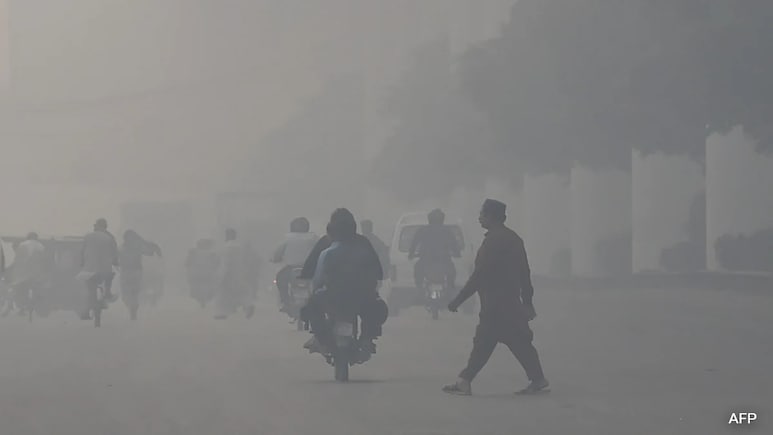
Lahore Once Again Tops the List of the World’s Most Polluted Cities
Lahore once again topped the list of the world’s most polluted cities on Wednesday, as a thick blanket of smog engulfed the region, pushing the city’s Air Quality Index (AQI) beyond 300. According to Swiss air quality monitoring group IQAir, the situation worsened by mid-morning, when Lahore’s AQI soared to a staggering 563, placing it firmly in the “hazardous” category. The city’s main pollutant, PM2.5, was recorded at 357, indicating severely toxic air, as reported by The News International.
Lahore wasn’t alone in facing the pollution crisis. Karachi also ranked among the top 10 most polluted cities in the world, landing in the seventh spot with an AQI of 154. Meanwhile, Faisalabad’s air quality reached alarming levels, recording an AQI of 1037 — more than 119 times higher than the World Health Organization’s (WHO) recommended limit. The PM2.5 concentration there stood at 595.2, underscoring the scale of Pakistan’s air pollution emergency.
Other major cities in Punjab and Khyber Pakhtunkhwa, including Multan and Peshawar, also reported dangerously high readings of 292 and 290, respectively, showing that the smog crisis is far from localized.
In response, the Punjab government has rolled out an “emergency plan” to combat the worsening situation. The measures include strict action against stubble burning, smoke-belching vehicles, and industrial violations. Authorities have also deployed anti-smog guns across Lahore’s pollution hotspots in a bid to clear particulate matter from the air. However, environmental experts warn that these short-term steps will not bring meaningful change without consistent regional cooperation and strong enforcement of emissions laws.
Health professionals are urging residents to take precautions. Doctors have advised people to wear masks and protective goggles when stepping outside to reduce exposure to the toxic air. Prolonged inhalation of such polluted air, they caution, can cause respiratory illnesses, throat irritation, and eye infections—particularly among children, the elderly, and those with preexisting health conditions. Citizens have also been advised to stay indoors as much as possible and keep windows closed, especially during early mornings and evenings when smog levels peak.
Despite official claims of crackdown operations, on-ground reports paint a different picture. Many brick kilns in Lahore’s outskirts, including Batapur, continue to operate illegally, releasing thick smoke into the air. Trucks transporting construction materials are often seen moving without tarpaulins, spreading dust and worsening air quality further.
As Lahore and other cities continue to grapple with this toxic haze, the public’s frustration is growing. Without sustained, long-term action, Pakistan’s major urban centers risk remaining trapped in a vicious cycle of smog and inaction.